29 March 2025 – Collegio Mazza, Padua
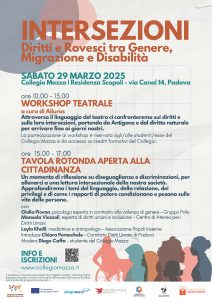
The initiative Intersections: Rights and Reversals across Gender, Migration, and Disability took place on 29 March 2025 at Collegio Mazza in Padua. The event, organised within the framework of the HEQUITY – Building Higher Education Quality Inclusion Pathways project co-funded by the European Union through Erasmus+, involved a total of 41 participants and consisted of two distinct moments: a theatre workshop for students and a roundtable open to the public.
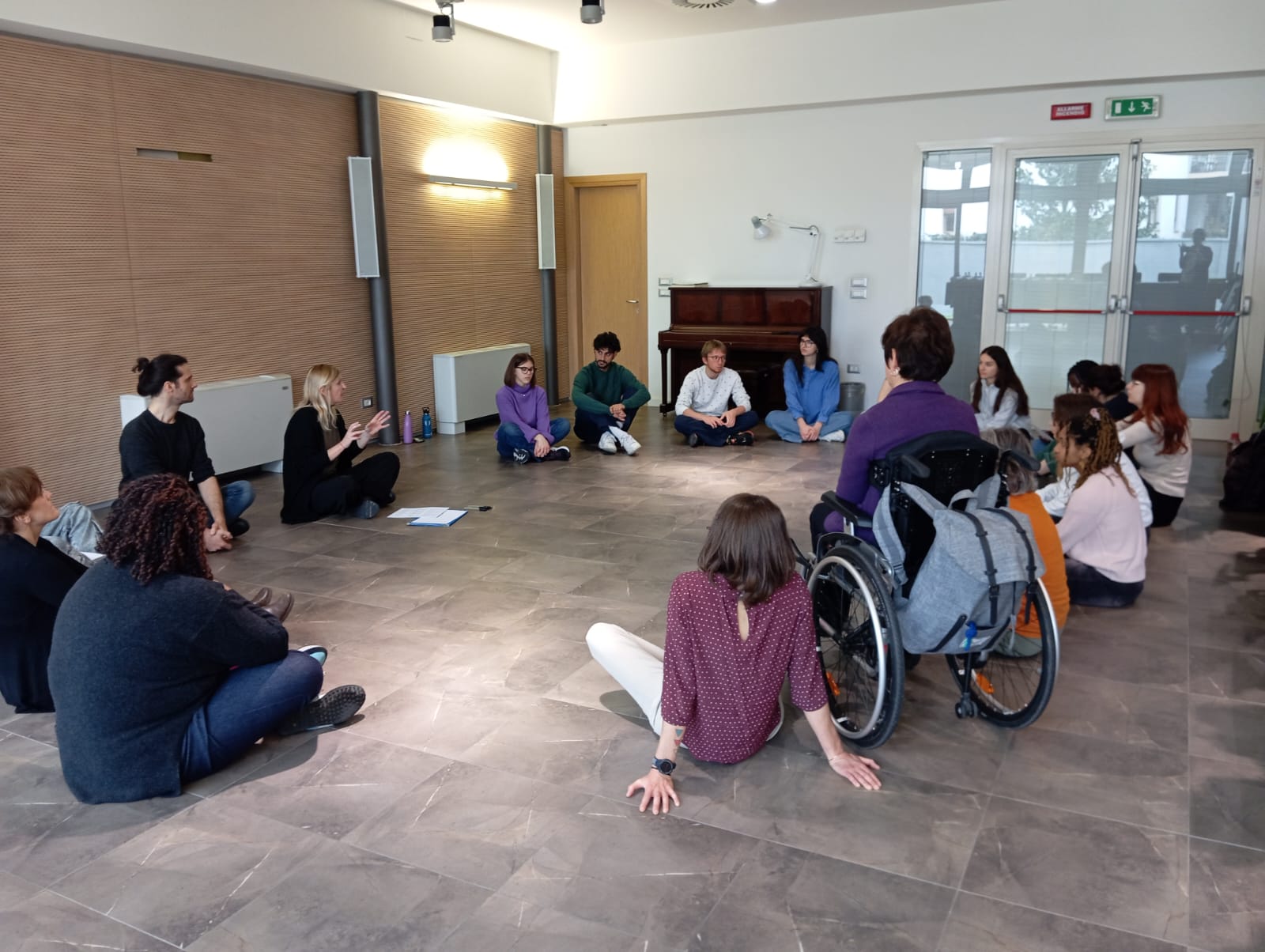
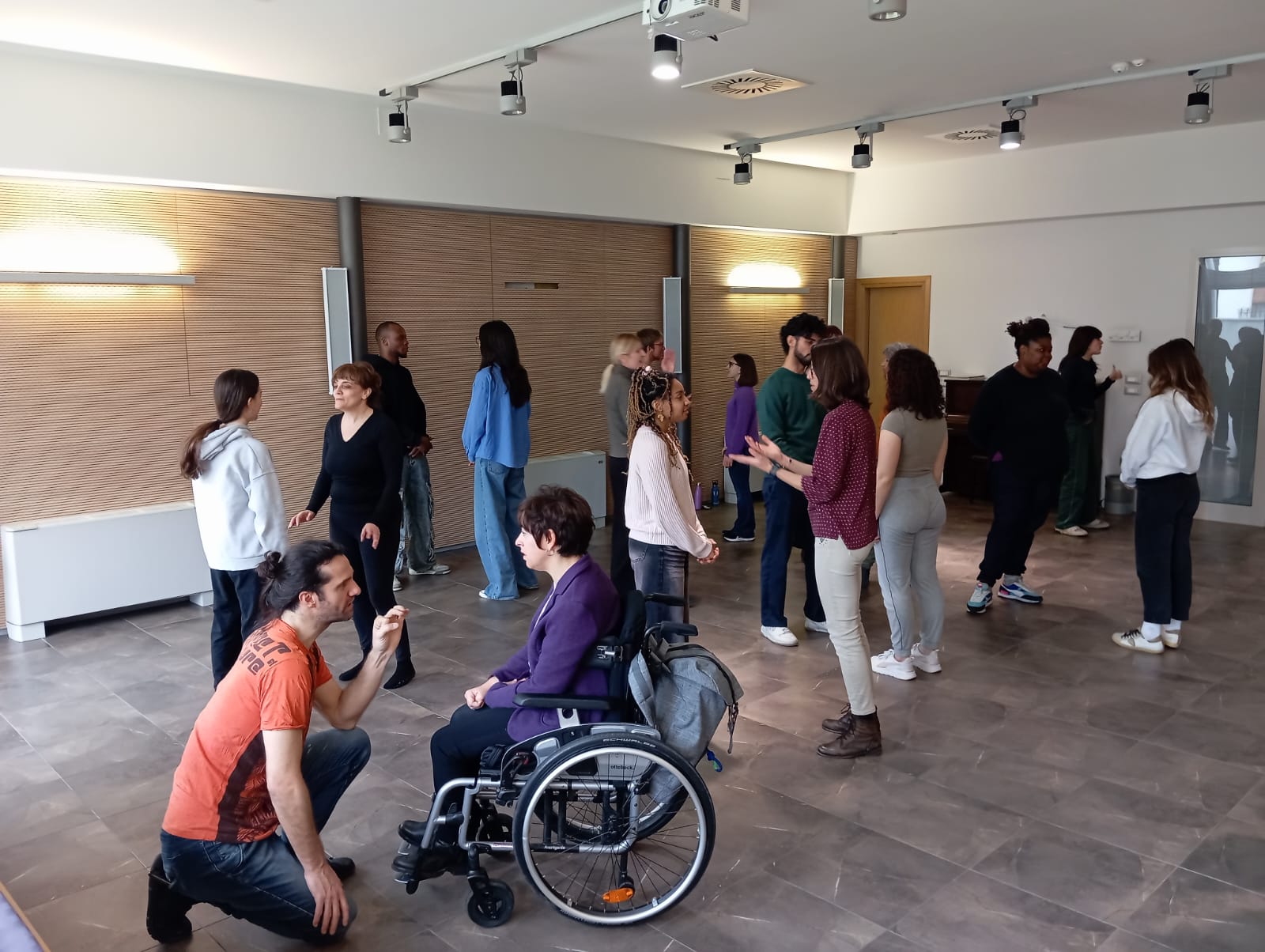
In the morning, a workshop curated by Ailuros invited students to explore rights and their intersections through theatrical language. Starting from the figure of Antigone and referencing natural law, participants engaged in reflections that connected symbolic and narrative dimensions with contemporary issues. Recognised as a training activity within the Collegio, the workshop offered an experiential space to approach complex themes through creative and participatory tools.
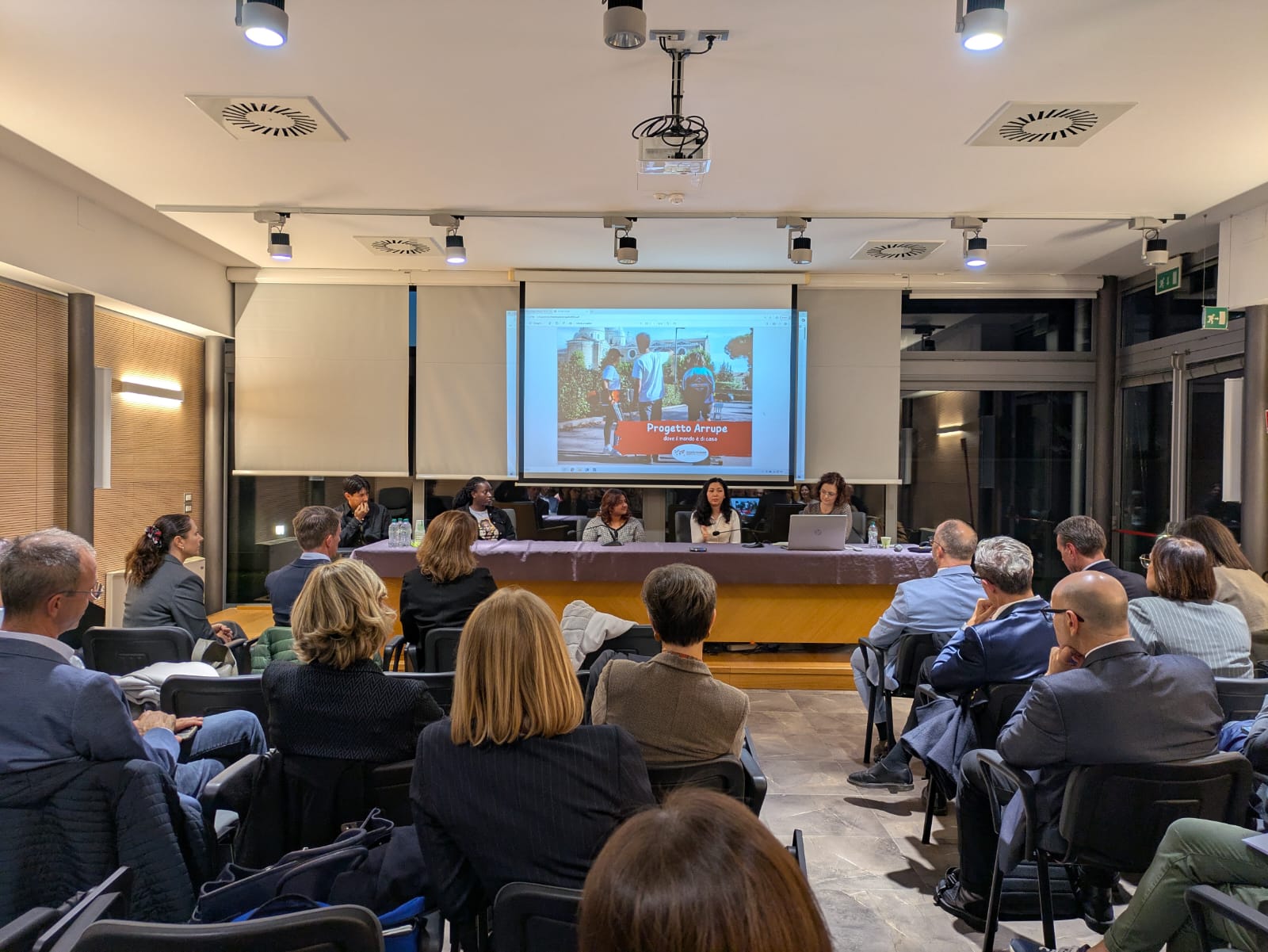
In the afternoon, a public roundtable was held, introduced by Chiara Pernechele of the Padua Human Rights Committee and moderated by Diego Caffa, a student at Collegio Mazza. The discussion featured three speakers: Giulia Piovan, a psychologist and expert on gender-based violence at Gruppo Polis; Manuela Viezzoli, a human rights and inclusion specialist at the University of Padua’s Human Rights Centre; and Leyla Khalil, a mediator and anthropologist at Associazione Popoli Insieme. The conversation addressed inequalities and discrimination affecting people’s lives, exploring the role of language, relational dynamics, the theme of privilege, and how power relations shape daily experiences. The event promoted an intersectional perspective, offering the wider community an opportunity for collective reflection on topics that are often examined separately.
The event contributed to the project’s dissemination through its visibility, the presence of official references, and the connection between the themes explored and HEQUITY’s aims. In particular, the reflection on multiple forms of discrimination indirectly echoes the challenges faced by refugee students in the educational context, showing how barriers related to power, language, and recognition can impact access to rights, including higher education.